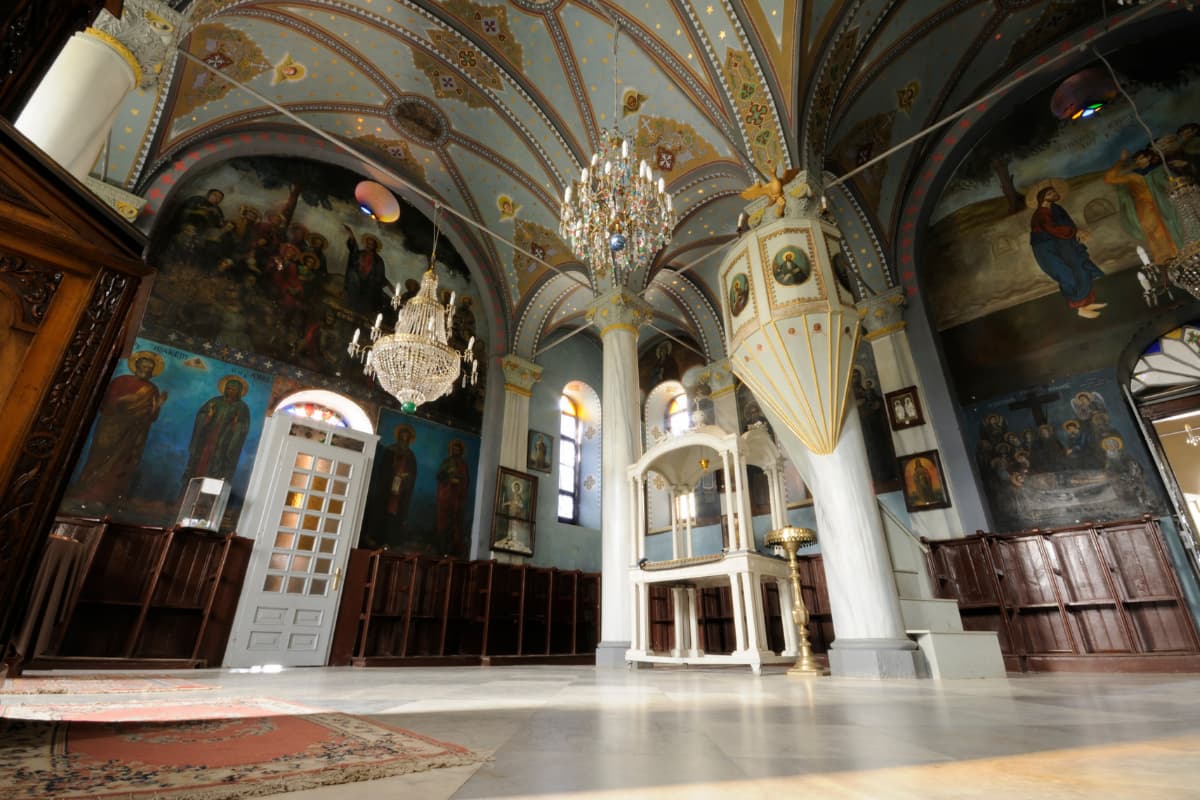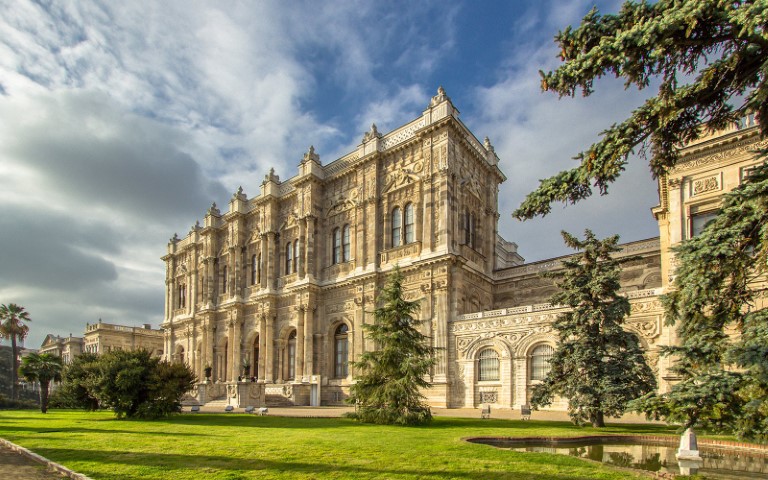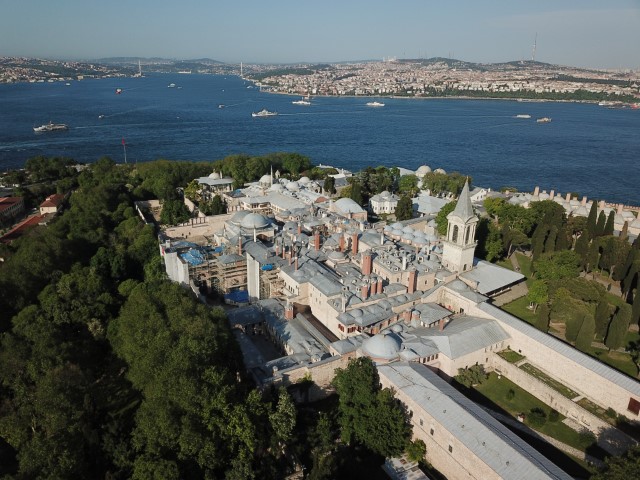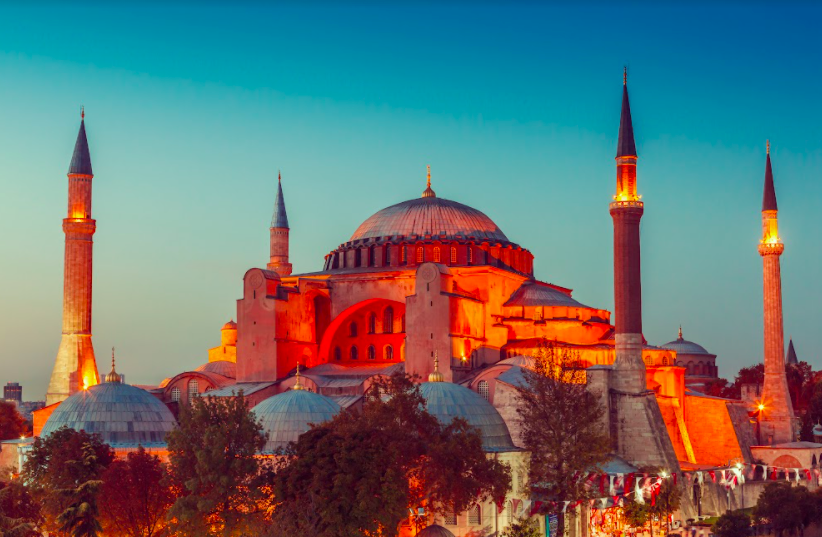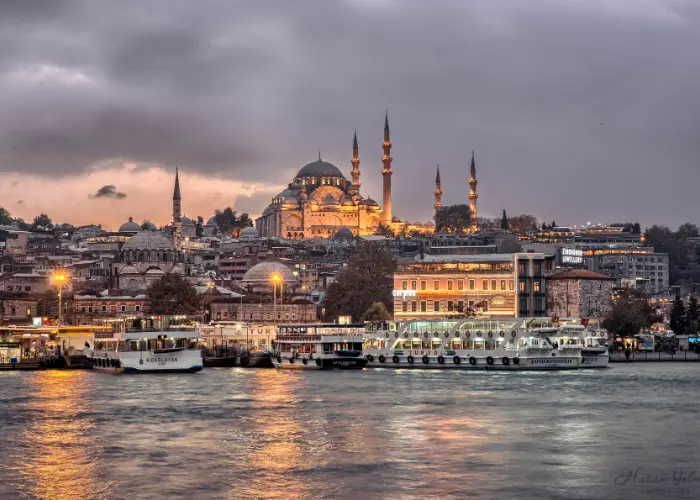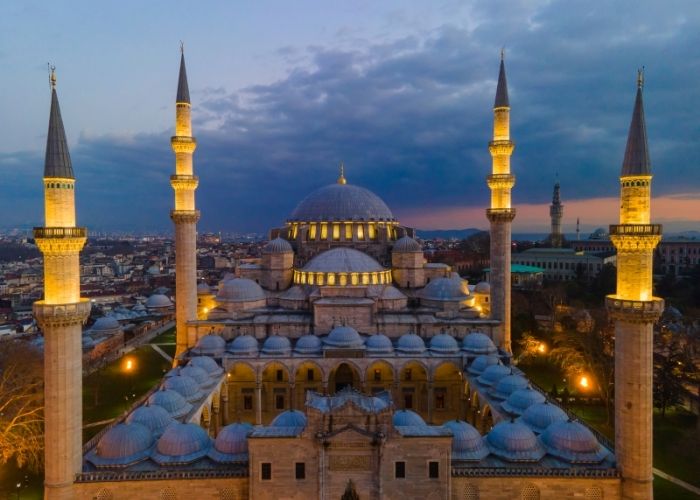





Three of Istanbul's defining monuments cluster on one ridge above the Sea of Marmara: Hagia Sophia, a 1,500-year-old church-turned-mosque whose dome rewrote what architecture could do; Topkapı Palace, the sprawling court the Ottoman sultans ruled from for nearly four centuries; and the Basilica Cistern, a cathedral-sized Roman reservoir hidden under the street. Together they are the spine of any first visit, and they are close enough to link on foot.
The catch is timing. Each has prayer-time pauses, weekly closures, or timed-entry quirks, and all three draw heavy crowds from mid-morning. This guide sequences them to dodge the worst of the queues, tells you what to actually look at inside each one, and shows where a pass turns three separate ticket lines into three taps. Prices are tagged April 2026 and should be confirmed at the gate.
| The trio at a glance (April 2026) | |
| Hagia Sophia | ~1,450 TL · opens 9 AM · 45–75 min · closed to visitors at prayer times |
| Topkapı Palace + Harem | ~2,500 TL · 09:00–18:00 · 2–3 hours · closed Tuesdays (seasonal) |
| Basilica Cistern | ~1,300 TL · 09:00–19:00 (day) · 30–45 min · separate night session |
| Walking distance | All three within a 10-minute radius |
| Best start | Hagia Sophia at 9 AM opening |
| With a pass | Pre-booked entry at all three; one tap each |
A note on prices before we start: the figures above are foreign-visitor gate prices for April 2026. The three together come to roughly 5,250 TL (about $164 USD) bought separately, which is most of why people weigh a pass for a Sultanahmet-heavy trip. We break that math down fully in our ticket-price comparison; here the focus is on seeing them well.
The best route: do them in this order
Order matters more than anything else here. Do it this way and you walk into each at its quietest, with no backtracking:
Hagia Sophia first, at the 9 AM opening. It is the single most crowded of the three by 10:30, so arrive early and you will have the galleries close to yourself.
Basilica Cistern next, a five-minute walk southwest across the tram tracks. It is cool and dim a good mid-morning contrast and the queue is shortest before lunch.
Lunch in between, on a side street off Divan Yolu, before the afternoon heat and the largest tour groups.
Topkapı Palace last, entering by early afternoon. It is the biggest by far and you want two to three unhurried hours; ending here lets you spill out into Gülhane Park as the light softens.
The whole loop is walkable find the cluster on Google Maps and you will see how tight it is. Resist the urge to take any transport between them; you will spend longer waiting for a tram than walking.
How long should you budget? Plan on a full day if you want to do all three properly and still eat lunch sitting down: roughly an hour at Hagia Sophia, 40 minutes in the Cistern, a relaxed break, and two to three hours at Topkapı. If you only have a morning, drop Topkapı to a future visit rather than rushing it half a Topkapí is worse value than none, because you will miss the Harem and the treasury queues will eat your time.
Hagia Sophia: what to see
Built by the emperor Justinian and finished in 537 CE, Hagia Sophia (Ayasofya) held the title of the world's largest cathedral for nearly a thousand years. It became a mosque after 1453, a museum in 1935, and a working mosque again in 2020 which is why it now pauses for the five daily prayers and why the ground floor is carpeted. Check the day's prayer schedule on the official museum information page before you go.
Stand under the centre of the dome first and just look up: at 31 metres across and seeming to float on a ring of windows, it is the thing the building is famous for, and photographs do not prepare you. Then find these:
The upper gallery mosaics the Deësis (Christ flanked by the Virgin and John the Baptist) is the finest, with shading centuries ahead of its time. The gallery is the part rushed visitors skip; do not.
The Viking runes scratched into a marble parapet in the south gallery graffiti left by a member of the emperor's Norse guard around the 9th century.
The weeping column in the north aisle, its copper-clad hollow worn smooth by centuries of hopeful thumbs.
The calligraphic roundels eight giant medallions naming God, the Prophet, and the first caliphs, among the largest such panels anywhere.
Two practical layers shape a visit. Since 2024 the upper galleries are managed on a separate visitor route from the prayer hall, and at busy times entry runs in timed waves another reason the 9 AM slot is worth the early alarm. The carpeted ground floor, added when worship resumed, means the famous Omphalion paving and the marble floor patterns are partly covered; the galleries are now where you get the clearest sightlines down into the nave.
An audio guide or a live guide is genuinely worth it here the layered Christian-and-Islamic history is hard to read off the walls alone. A guided entry, where the history is walked through for you, turns 45 confused minutes into an hour that sticks; our Hagia Sophia visit guide covers how the guided option works.
Basilica Cistern: what to see
A short walk away and a flight of steps down, the Basilica Cistern (Yerebatan Sarnıcı) is a different register entirely: a sixth-century Roman reservoir the size of a cathedral, its 336 columns rising out of shallow, floodlit water under a low brick ceiling. It once stored water piped from 19 km away to supply the Great Palace; today a raised walkway threads between the columns to a soundtrack of dripping and soft music.
It is small 30 to 45 minutes is plenty but worth slowing down for. Look for:
The two Medusa heads at the base of two far columns, one set sideways and one upside down. Why they are positioned that way is unknown, which is half the appeal.
The Hen's Eye column, carved with teardrop-and-eye patterns, said to honour the slaves who died building the cistern.
The recent restoration a raised platform and lighting redesign have made the far chambers reachable for the first time in years.
One practical note: the Cistern now runs a separate, pricier evening session with a different atmosphere. Day entry is what a standard pass covers and what most visitors want; confirm which session your ticket is for so you are not turned away at the wrong hour.
Topkapı Palace: what to see
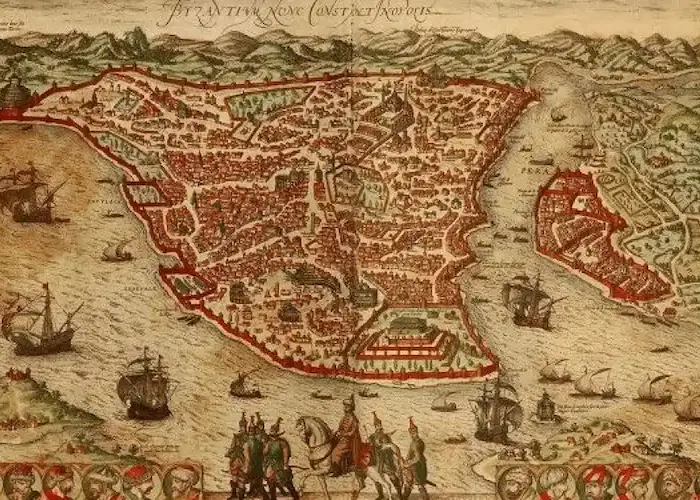
Save the biggest for last. Topkapı Palace (Topkapı Sarayı) was the seat of Ottoman power from the 1460s until the court moved to Dolmabahçe in the 1850s not one building but a walled city of courtyards, pavilions, kitchens, and gardens spread over the headland. Give it two to three hours; rushing it is the most common Sultanahmet mistake. Confirm opening days, which shift by season, on the official Topkapı information page.
Work through it courtyard by courtyard. The unmissable parts:
The Imperial Treasury the Topkapı Dagger and the 86-carat Spoonmaker's Diamond are the headliners; expect a slow shuffle past the cases at peak.
The Harem a separate add-on (about an extra 1,000 TL, April 2026) and the part people most regret skipping: tiled private apartments, the sultan's quarters, and the cleverest rooms in the complex. Make sure it is on your ticket.
The Sacred Relics rooms religious objects of deep significance, viewed quietly to a continuous live recitation of the Qur'an.
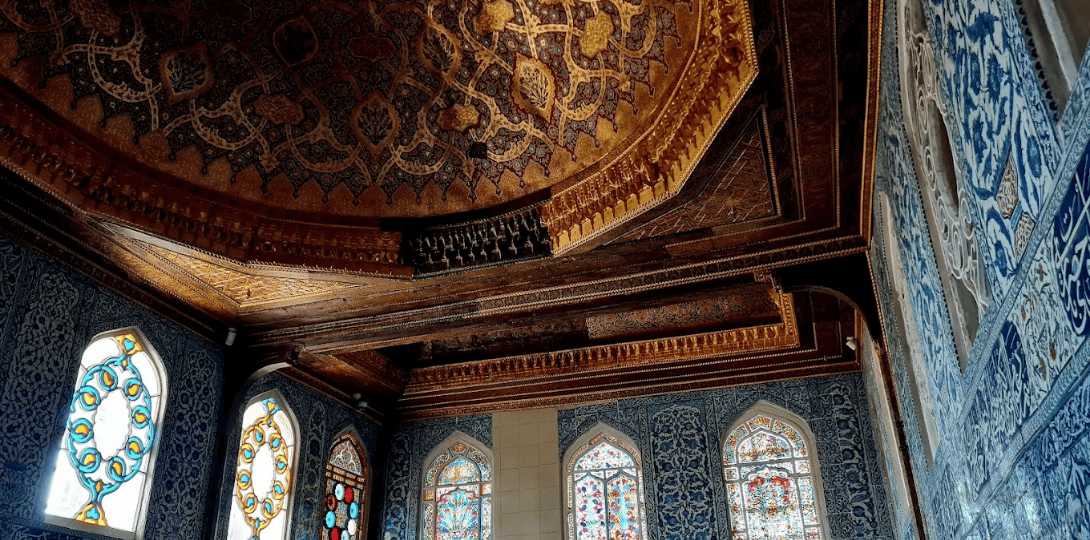
The Fourth Courtyard terraces the Baghdad and Revan kiosks and a tiled terrace with the view over the Golden Horn and the Bosphorus that you will keep as the photo of the day.
Because Topkapı is so large, this is where a guide or a planned highlight list pays off most it is easy to wander for two hours and miss the Harem entirely. For a deeper room-by-room plan and timing, see our Topkapı skip-the-line entry guide.
How pass entry works at the trio
All three sights take a separate ticket if you buy at the gate, and all three queue. With a pass, the entry sits in the app and you scan a QR code at a dedicated lane three taps instead of three ticket lines. In practice that means walking past the queue at Hagia Sophia is the difference between a five-minute entry and a thirty-minute one on a spring weekend.
A few specifics worth knowing so the taps go smoothly:
Hagia Sophia uses a pre-booked entry lane separate from the standard ticket queue; have your QR ready and join the signed pass/booked line.
Topkapı confirm your pass tier includes the Harem, as it is ticketed separately at the gate; the Palace Combo tiers usually bundle it.
Basilica Cistern the pass covers day entry; the night session is a different, paid event.
Battery and screen your entry is a screen QR, so keep your phone charged and brightness up; download the pass before you arrive in case of patchy signal.
If you have not used a digital pass before, our guide to the pass app walks through the QR entry step by step so a slow scan at the gate does not cost you the time you came to save.
Practical tips: crowds, dress, and photos
Beat the crowds by starting at 9 AM and doing Hagia Sophia first; by 11 AM the tour groups arrive in waves and stay until late afternoon.
Dress for the mosque rules. Hagia Sophia is a working mosque: shoulders and knees covered, shoes off on the carpet, and women cover their hair (scarves are available at the door).
Photography is fine in all three without flash. The Cistern is dim brace your phone on a railing rather than raising the ISO.
Accessibility is mixed: Hagia Sophia's ground floor is step-free but the galleries are not; the Cistern has stairs down with a lift at some entrances; Topkapı's courtyards are largely walkable but cobbled.
Water and a layer Sultanahmet has little shade, and the Cistern is markedly cooler than the street.
Nearby: what to add when you finish
When the trio is done, you are surrounded by more, most of it free or quick. The Blue Mosque (Sultan Ahmet Camii) faces Hagia Sophia across the square and is free outside prayer times. The Hippodrome, with its Egyptian obelisk and Serpent Column, is an open public space. Gülhane Park, just below Topkapı's gate, is thick with tulips in April and costs nothing. The Grand Bazaar and Spice Bazaar are each a short walk or one tram stop away.
If you still have energy after Topkapı, the Istanbul Archaeological Museums sit just inside Gülhane Park, a few minutes from the palace's lower gate three buildings of Greek, Roman, and ancient Near Eastern finds, including the Alexander Sarcophagus, and far quieter than the big three. Many passes include it, and it is an easy, low-crowd add-on while you are already on the hill.
If you are fitting the trio into a wider plan, this whole cluster is Day 1 of our first-timer's 3-day itinerary, which carries straight on to the Bosphorus and the Asian side.
How to get there
The whole trio sits on the T1 tram line: get off at Sultanahmet for Hagia Sophia and the Cistern, or Gülhane for the quieter back approach to Topkapı. From Taksim or Beyoğlu, take the funicular to Kabataş and the tram from there; from the Asian side, ferry to Eminönü and ride two stops. A few lira on your İstanbulkart (ee-STAN-bool-kart, the rechargeable transit card) beats a taxi stuck in old-city traffic. Ferry times are on the Şehir Hatları timetable.
See all three without three ticket lines If your trip leans on Sultanahmet, these three alone run to roughly 5,250 TL (≈ $164 USD) in single tickets (April 2026). A pass covers the trio plus the Harem on combo tiers, with pre-booked entry at each gate. Get your pass and plan your Sultanahmet day. |
Frequently asked questions
Can I visit Hagia Sophia, Topkapı, and the Basilica Cistern in one day?
Yes, comfortably, if you start at Hagia Sophia's 9 AM opening, do the Cistern next, and finish at Topkapı in the early afternoon. The three sit within a 10-minute walk, and the only long stop is Topkapı, which needs two to three hours.
How much do the three tickets cost in 2026?
At April 2026 gate prices, roughly: Hagia Sophia ~1,450 TL, Topkapı with the Harem ~2,500 TL, and the Basilica Cistern ~1,300 TL about 5,250 TL (≈ $164 USD) together. Prices change often, so confirm at the booth.
Is the Topkapı Harem included in the standard ticket?
No. The Harem is ticketed separately, about an extra 1,000 TL at the gate (April 2026). On a pass, check that your tier includes it the Palace Combo tiers usually do, while a basic ticket does not.
Do I need a guide for these three?
Not required, but recommended for Hagia Sophia and Topkapı, where the history is dense and easy to miss. An audio guide or a guided entry adds context the signage does not; the Cistern is self-explanatory in 30 minutes.
What should I wear to Hagia Sophia?
It is a working mosque, so cover shoulders and knees, remove shoes on the carpeted floor, and women should cover their hair. Scarves are available at the entrance if you arrive without one.
Which is the busiest, and when is it quietest?
Hagia Sophia is the most crowded, peaking from about 10:30 AM through mid-afternoon. The quietest window for all three is the first hour after opening, which is exactly why this guide starts there at 9 AM.
Are the monuments open every day?
Mostly, but Topkapı closes one weekday (Tuesdays) and all three pause or shift hours around religious holidays. Hagia Sophia also closes to visitors during the five daily prayer times. Check each before you fix your day.
Useful Turkish for the trio
Ayasofya (ah-yah-SOHF-yah) Hagia Sophia the Turkish name you will see on every sign
saray (sah-RYE) palace as in Topkapı Sarayı
sarnıç (sar-NUHCH) cistern the underground reservoir below the street
cami (jah-MEE) mosque pronounced 'jah-mee', not 'cam-ee'
çıkış (chuh-KUSH) exit follow these signs on the way out of the big sites