The Topkapı Palace Guided Tour is available daily (except Tuesdays) at multiple time slots. Please check your app for the most up-to-date tour schedule.
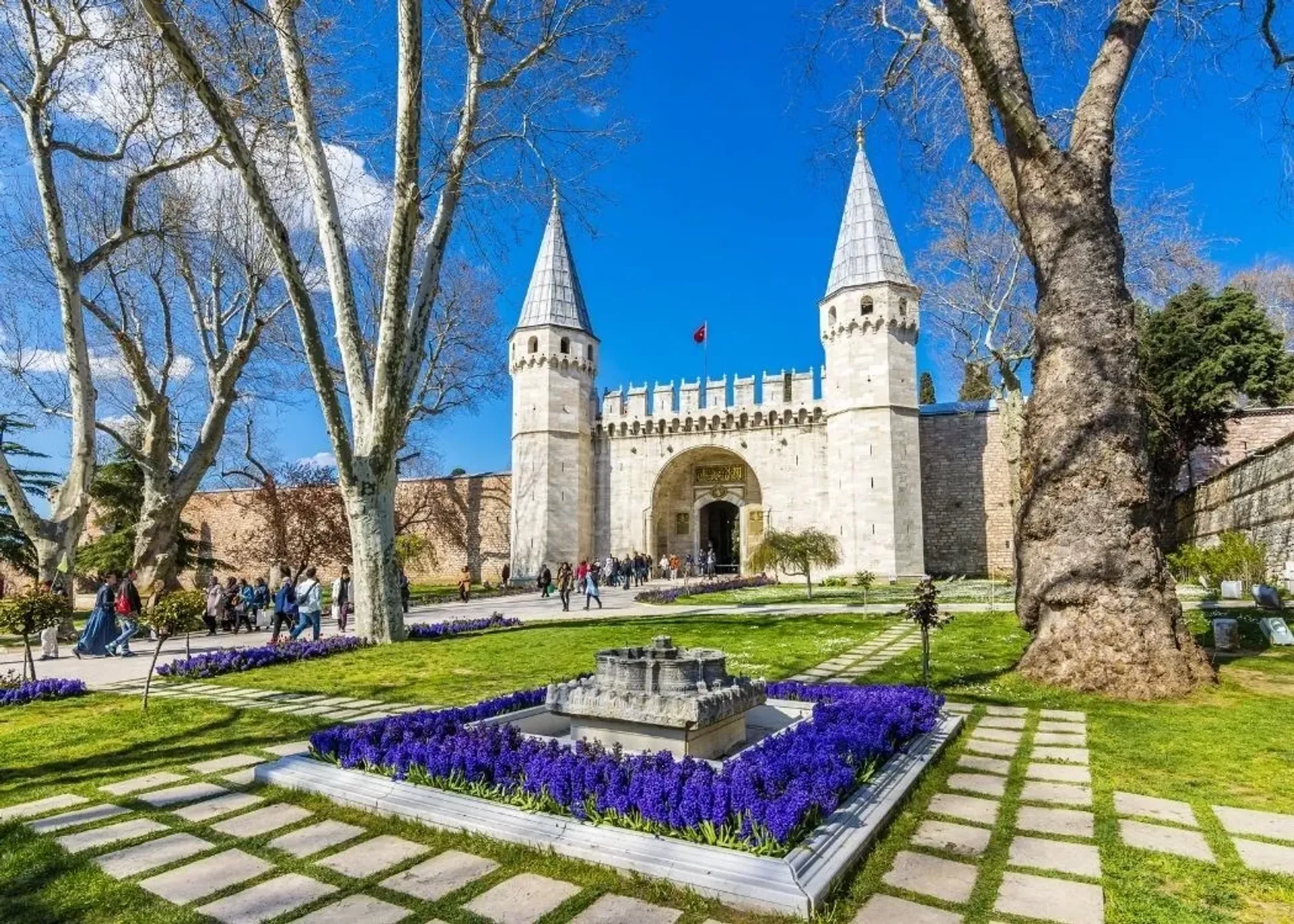
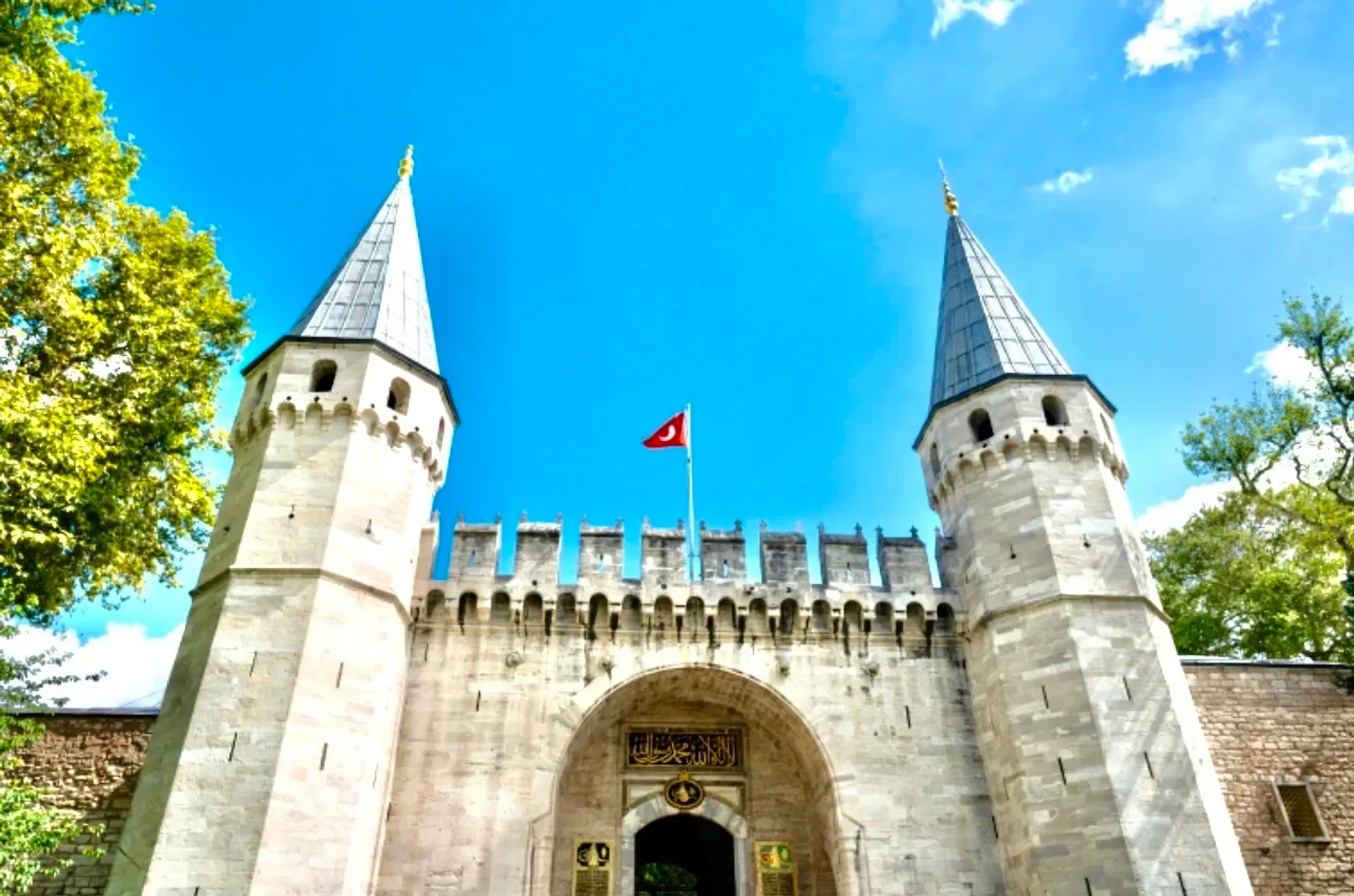
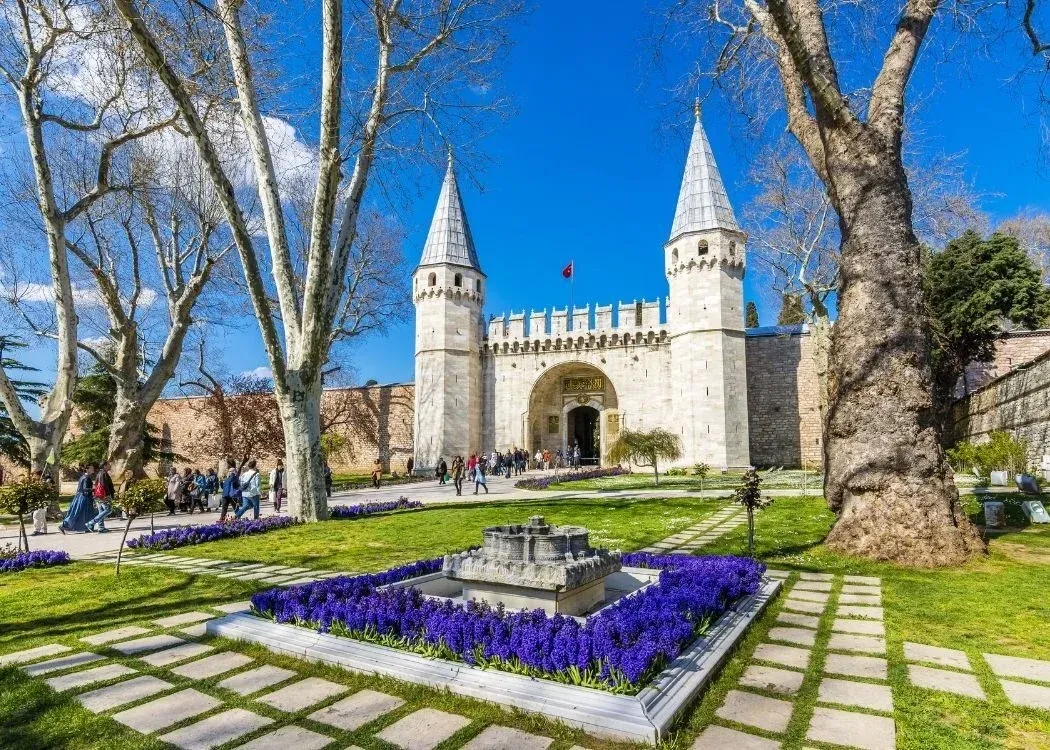
Please meet your guide in front of the Fountain of Sultan Ahmed III at least 15 minutes before the tour starts. The fountain is located right in front of the main entrance gate (Bab-ı Hümayun) of Topkapi Palace. Your guide, holding a white flag with the Istanbul Tourist Pass® and istanbul.com logos, will meet you there. Get in easily and explore Topkapi Palace at your own pace while listening to the professionally curated audio guide in 25 different languages!


Guided Entry to Istanbul Topkapi Palace
Entry to the Harem Section of Topkapi Palace for Prime Pass holders
Professional English-speaking tour guide
Audio Guide with 25 different language options
Discover Ottoman Royal Life at Topkapı Palace
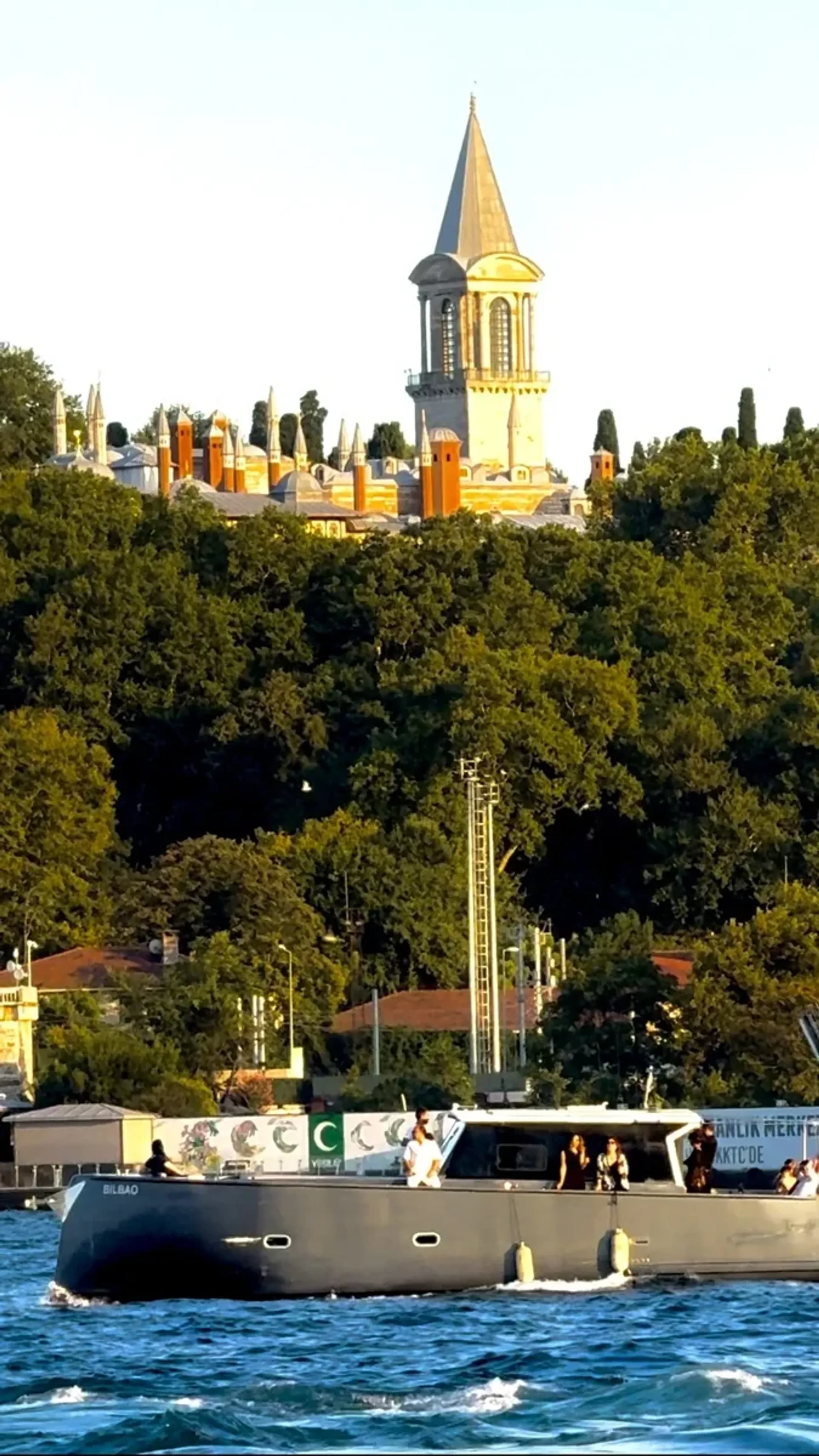
Described by the famous Ottoman traveler Evliya Çelebi as an extraordinary royal residence, Topkapı Palace is one of Istanbul’s most iconic historical landmarks. For nearly 400 years, it was the home of the Ottoman Sultans and the political center of the empire.
Topkapı Palace offers a rich cultural experience with remarkable collections of imperial weapons, fine textiles, valuable jewels, manuscripts, and works of art. It also houses an outstanding collection of Chinese and Japanese porcelain, making it one of the most fascinating museums in the city.
Among the palace’s most remarkable sections is the Holy Relics Chamber, where sacred objects linked to important religious figures are carefully preserved. This part of the palace adds a unique spiritual and historical layer to the visit.
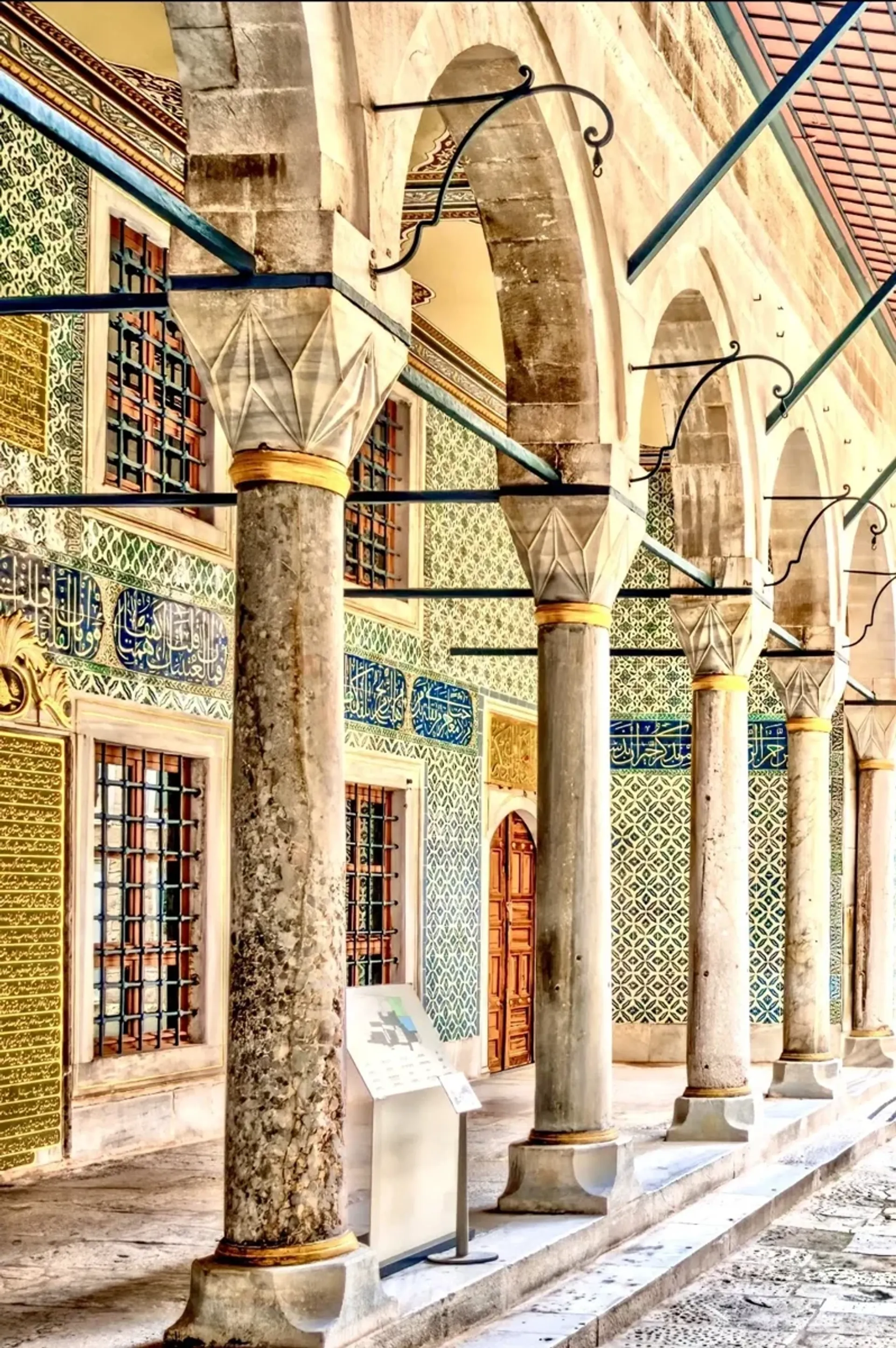
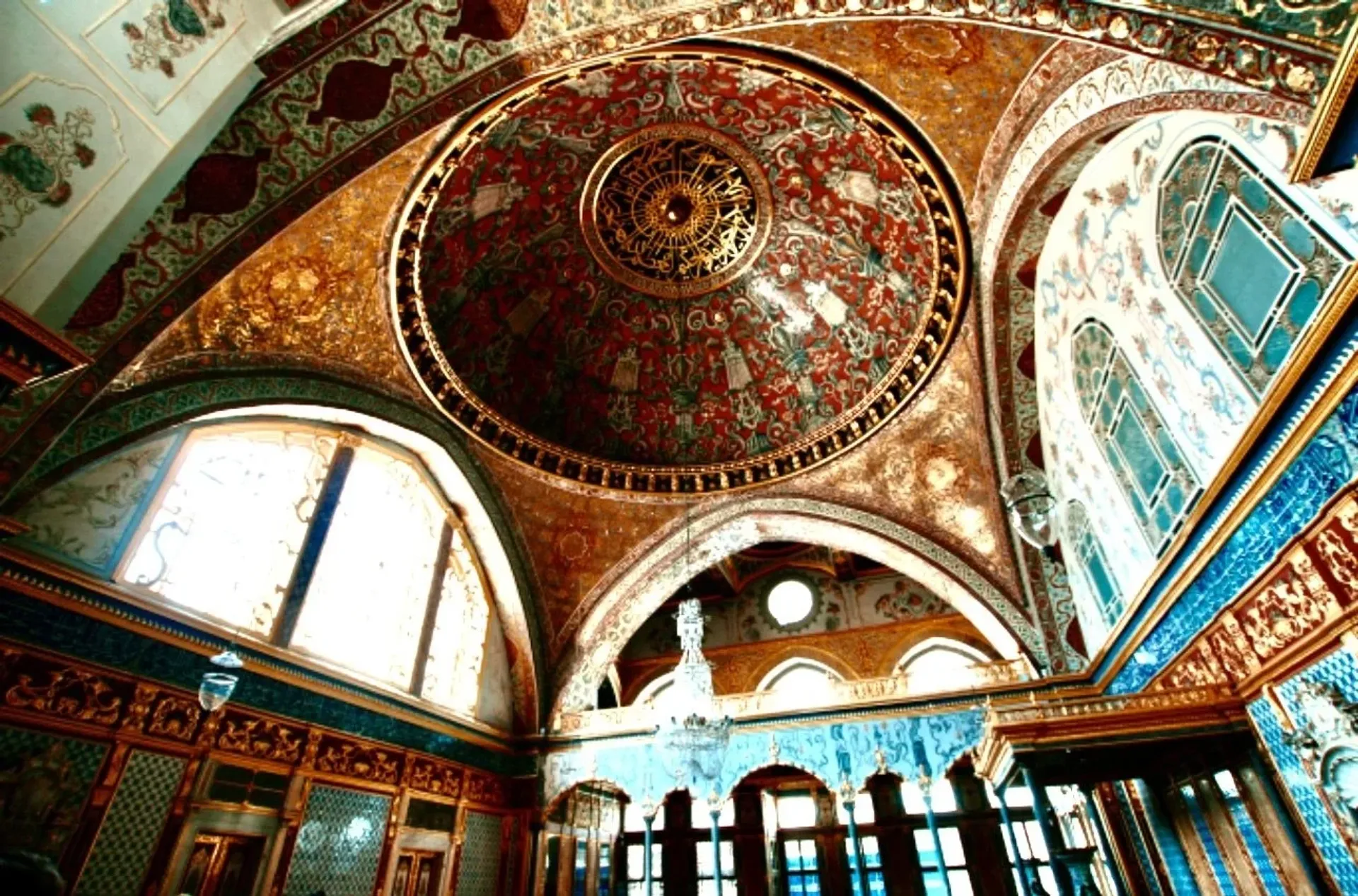
The Harem is another essential part of the palace complex. Once reserved for the Sultan’s family, royal women, and selected court members, it reflects the private side of Ottoman palace life. With its many rooms, baths, mosques, and richly decorated interiors, the Harem presents a striking picture of Ottoman elegance and court tradition. Highlights include the Imperial Hall, the Court of the Concubines, and the Privy Chamber of Murad III.
Today, Topkapı Palace is one of the most visited museums in Istanbul and a must-see for anyone interested in Ottoman history, imperial architecture, and royal collections. Add it to your Istanbul itinerary and enjoy more time discovering one of the city’s greatest treasures.
Less waiting, more exploring.
For this amazing experience and more, Buy Your Pass Now! Istanbul Tourist Pass® is here to make your Istanbul trip an unforgettable experience!
Your guide will be waiting for you in front of the Fountain of Sultan Ahmed III at least 15 minutes before the tour starts, holding a a white flag with the Istanbul Tourist Pass® and istanbul.com logos. From there, your guide will take you on a short 1-minute walk to the main entrance gate (Bab-ı Hümayun) of Topkapi Palace.
Reaching Topkapı Palace is simple from many parts of Istanbul. Located in the historic Sultanahmet area, the palace is well connected by public transport and easy to access.
By Tram
The easiest way to reach Topkapı Palace is by taking the T1 Tram Line (Bağcılar-Kabataş). Get off at either Sultanahmet or Gülhane station. From both stops, the palace is around a 5 to 10-minute walk away.
By Metro
Take the M2 Metro Line to Vezneciler station. From there, you can walk for about 20 minutes or connect to the T1 tram at Laleli-Üniversite and continue toward Sultanahmet.
By Bus
Several bus lines going toward Eminönü or Beyazıt stop near the historic center. After getting off, you can either walk toward Topkapı Palace or continue with the T1 tram.
By Taxi
Taxis are widely available across Istanbul. Simply tell the driver you want to go to Topkapı Palace in Sultanahmet. For a smoother ride, it is a good idea to make sure the meter is running and follow the route on a navigation app.
On Foot
If you are already in Sultanahmet, Topkapı Palace is within walking distance of many major landmarks. The area is easy to navigate, and signs usually lead the way.
For a more comfortable visit, morning or late afternoon hours are usually a better choice during busy travel periods.
Topkapı Palace, one of the largest and most eye-catching structures of the Ottoman period, contains historical elements in abundance. This building, which has managed to preserve its splendor until today, is open to visitors as a museum. The Topkapı Palace Museum is divided into different sections and each section is believed to have a different function, hosting millions of visitors throughout the year. When it comes to the size of the palace, it is not possible for all parts of it to be open to visitors. However, a large part of the palace is available for visitation.
Topkapi Palace with its Unique Architecture
Topkapi Palace Museum is among the best places to visit in Istanbul. It amazes its visitors with its impressive history. This palace, which was built by the famous Ottoman Sultan Mehmet the Conqueror right after the conquest of Istanbul, hosted dozens of Ottoman Sultans and powerful personalities of history.
Its construction was started in 1460 and completed in 1478. It was built on a land of 700,000 square meters. Being located in Sarayburnu, at the tip of the Istanbul peninsula between the Bosphorus and the Golden Horn, Topkapi Palace can be seen from almost anywhere in Istanbul.
Four hundred years of the empire, especially during the era of Fatih Sultan Mehmet and Sultan Abdülmecid; Topkapı Palace, has managed to maintain its importance since the day it was built. This structure can also be considered as the center of education, administration, and art.
The Topkapı Palace museum, which was opened to the public as a museum after the proclamation of the Republic of Turkey, has an interior space of 400,000 square meters. At the same time, this palace is the first museum of the Republic of Turkey. Topkapı Palace has collections and approximately 300,000 archive documents. It is one of the largest palace museums in the world. The palace, which has many different works under its roof, is flooded by both local and foreign visitors every year.
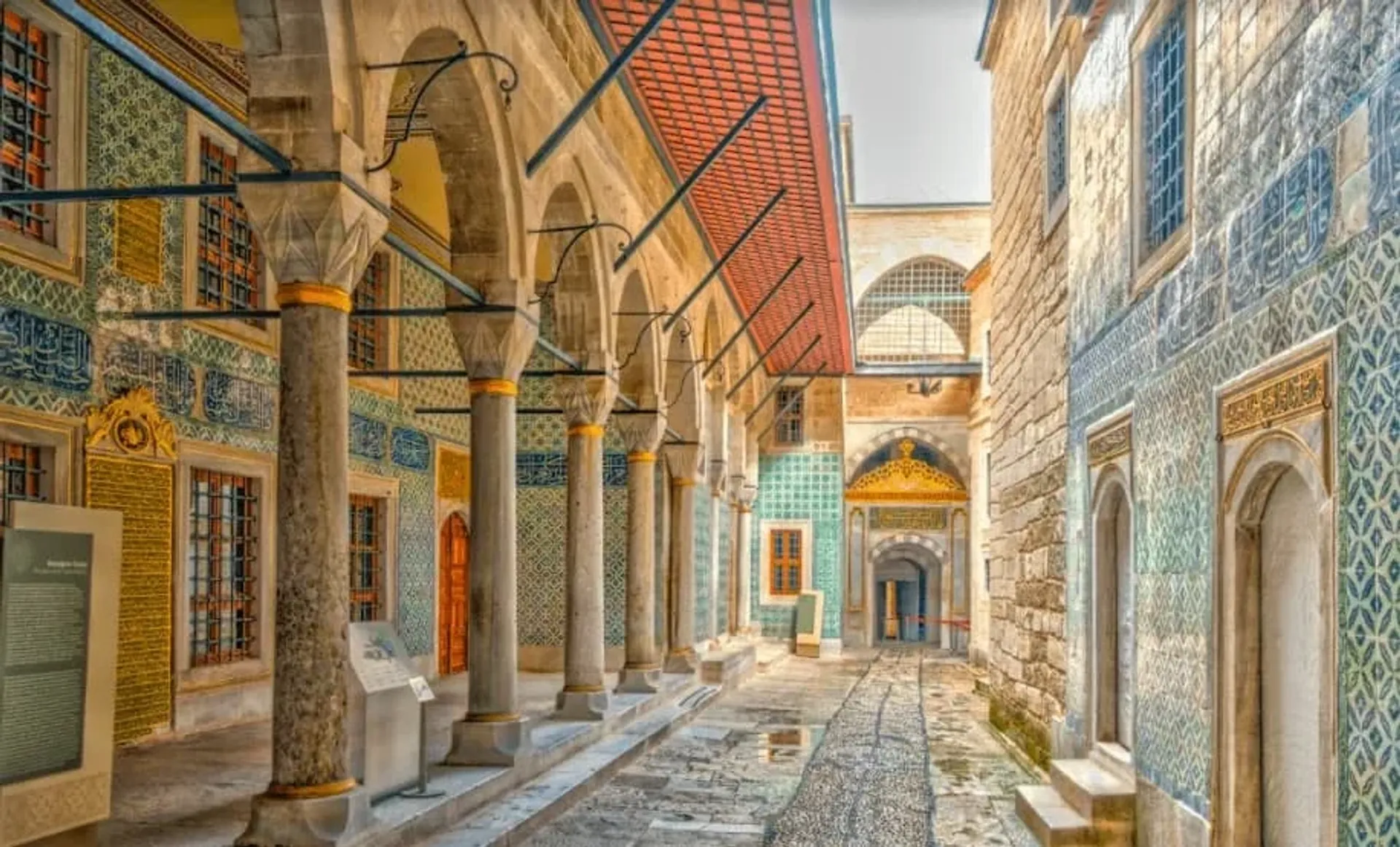
Surrounded by gardens and squares, the palace has four interlocking courtyards. Each courtyard has a different purpose. For example, the courtyard used by the statesmen was not the same as the courtyard used by Sultan's concubines. At the same time, Sultan's family members used a completely different part of the Palace.
Topkapı Palace museum, which combines aesthetic appearance with baroque architecture, perfectly reflects the magnificent Ottoman culture and lifestyle. In addition to the showiness of the palace, there are also special corners, as the Sultan and his family loved.
It is possible to find traces of history in this building, where the plain walls are decorated with fine details. The precious jewels in the palace, clothes belonging to the Sultan and his family, items of religious importance and historical furniture attract attention.
The Topkapı Palace Museum, which receives thousands of visitors throughout the year, is known for being constantly busy and crowded. You can visit this museum, with the privilege of the Istanbul Tourist Pass.
What does Topkapi Palace contain?
Topkapi Palace is really big, covering an area of about 700,000 square meters. What to see in Topkapi Palace? When visiting Topkapi, you can see the palace, which consists of two basic organizations: the outer and inner palaces and the Harem. Topkapi has several separate rooms that have been used by rulers for various purposes for centuries. There are private rooms, pavilions, rooms for soldiers, barracks, a large kitchen, a large library, loggias, offices, and prison rooms. Before passing the first section, called the Imperial Gate, be sure to look at the beautifully decorated stone fountain in the outer square. It is a small rectangular structure with five smaller domes made in the rococo style of 1728.Topkapi Palace paintings present a collection of imperial portraits housed in the Sultan's chambers. The painted portraits depict all Ottoman sultans.
First Gate and Courtyard
Surrounded by tall walls, the first courtyard functioned as an outdoor area or park and is the largest of all the palace courtyards. Some historic structures of the First Courtyard no longer exist. When you pass through the imperial door on the right, you will see a space known as the former Ministry of Finance. There are two niches on the door and an inscription of the Qur'an. To the left of it is the Byzantine Church of Hagia Eirene.
Second Gate and Courtyard
The second gate was built in 1468, during the time of Mehmed II the Conqueror, and was restored during the time of Suleiman the Magnificent, similar to European construction styles. The premises behind this second gate served, in present terms, as the logistics and administration division, for affairs concerning the administration of the empire. To the right of this second gate you can see the large kitchen. Next to the kitchen on the right are barracks and pantries, and further along the trail you will find the imperial barn and the Besir Age mosque. On the left, there is the Topkapi Palace tower of justice. A panel of officials met there to discuss state issues and the Sultan, often hidden behind a gold screen high up in the wall, would tap on the screen if he disagreed with their decisions.
Harem
These were imperial chambers and every detail of life in the Harem was characterized by tradition, obligation and ceremony. The word 'harem' literally means 'forbidden' or 'private'. Topkapi Palace’s Harem was the private haven of the Ottoman Sultan and his extended family at Topkapi Palace. Here, the word ‘harem’ also referred to the physical space in which he and his family members lived. The first Harem was deliberately built by Murat III in 1574 and later upgraded by the Sultans. Apart from the Sultans, the only ones in the Harem were the eunuchs who guarded him. You will have the opportunity to see beautifully decorated rooms, with canopies, marble fireplaces, flower tiles on floors and small fountains.
Third Courtyard
Topkapi Palace Gate of Felicity is the entrance to the third courtyard, which consists of a private and residential part of the palace. No one could walk through this door without the Sultan's approval. The gate was built in the late 15th century. Under the vault of this third courtyard is the "Preston Hall" from the period of Mehmed the Conqueror, which is where he met with foreign MPs and viziers. Behind this hall is the library of Ahmet III, made in 1719. The most valuable of the entire Topkapi complex is the royal treasury, which contains the most valuable pieces of jewelry, weapons, diamonds and emeralds, with ruler's uniforms, kaftans, sultan uniforms and dresses.
Fourth Courtyard
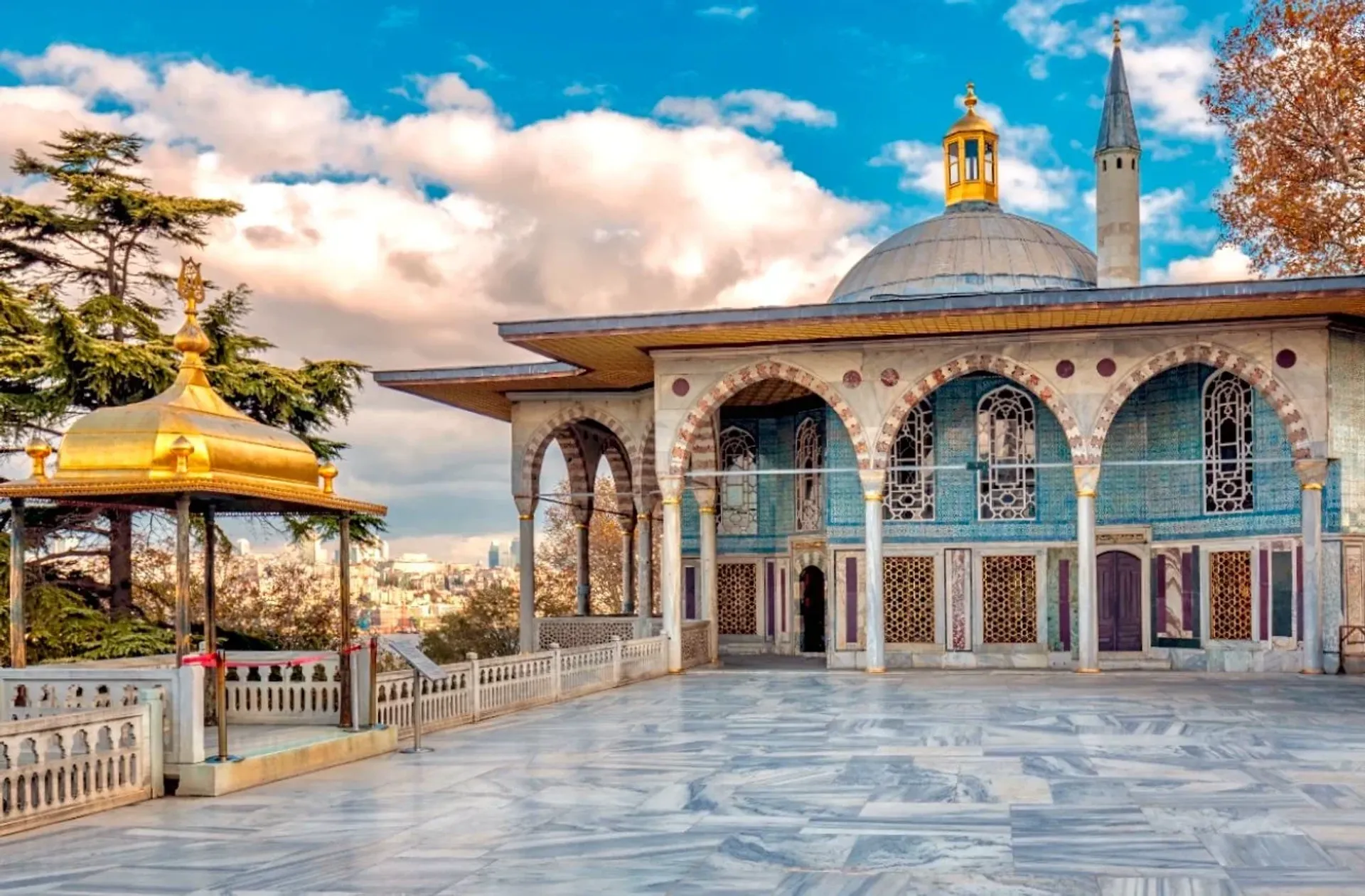
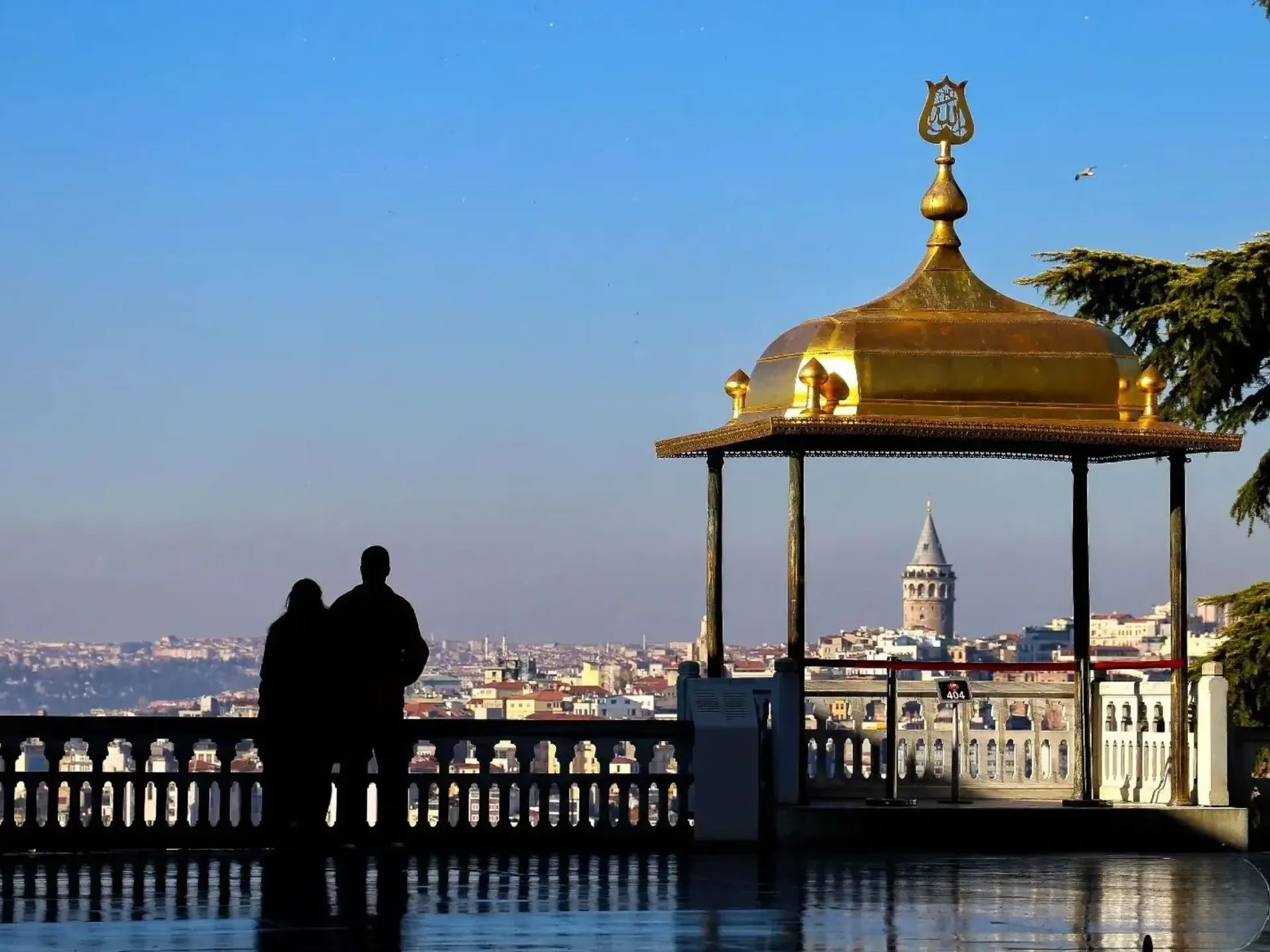
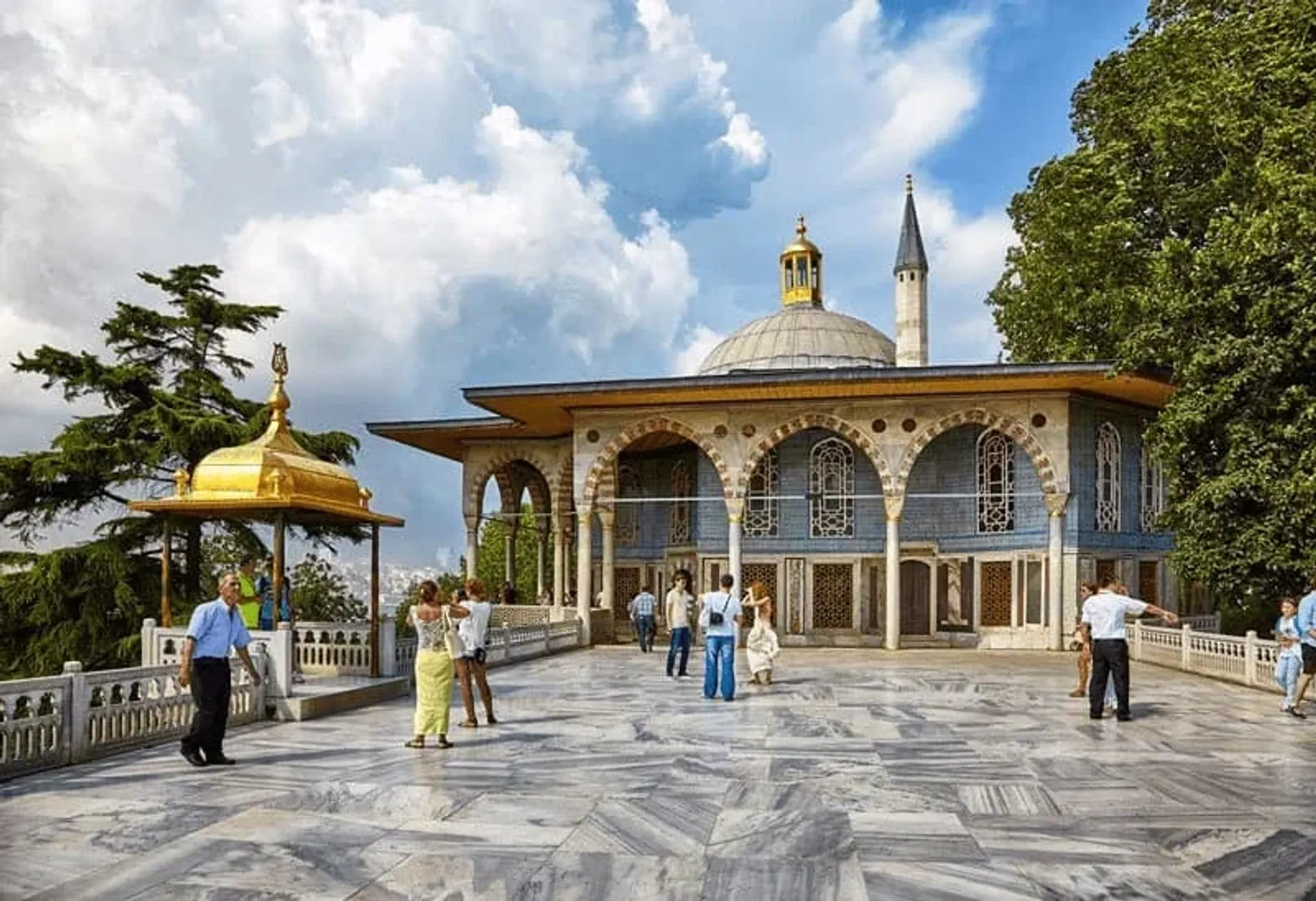
Here you will be amazed by the beautiful tulip garden. On the edge of the terrace is a raised tower, once a pharmacy of the imperial palace, and a little further is a pavilion of Mustafa pastures. To the left of the garden is a small terrace with a swimming pool. At the end of the terrace there is a view of the Golden Horn Bay and the Bosphorus. You’ll also find the most beautiful pavilion of Topkapi Palace there, "Baghdad Pavilion", built in 1638 in honor of the occupation of Baghdad. The walls of the pavilion are lined with ceramic tiles and the inside of the dome is made of deer leather and gold. The windows are of ivory and pearl.
Hagia Irene
Hagia Irene, situated in the outer courtyard of Topkapı Palace, stands as the oldest church of the Eastern Roman Empire (Byzantine) and the second-largest church in Istanbul after Hagia Sophia. Initially constructed in 330 on the site of an older wooden temple, Hagia Irene suffered damage during the Nika Revolt in 532 and was subsequently rebuilt during the reign of Emperor Justinianus. The three-nave basilica, consisting of naos, narthex, and atrium, is the sole surviving example of a Byzantine church with a standing atrium. Renovations during the Iconoclastic era by Leo III and Constantine Copronymus altered its original decoration. Notably, the church served various purposes during the Ottoman Empire era, functioning as a loot and gun depot, later becoming the country's first official museum named Müze-i Hümayun. Today, Hagia Irene continues to showcase its rich history and architectural significance. Entrance tickets to Hagie Irene are sold separately and the tickets are not included with this tour.
Istanbul Prime Pass® holders do not pay admission at the Topkapı Palace Museum Harem Section.
Enjoy the majestic Topkapı Palace with your Fast Pass or Discover Pass, and choose the Prime Pass to unlock entry to the beautiful Harem section.
Best Sights in One Day
Visit 2 landmarks & 3 authentic experiences including Hagia Sofia or Topkapi Palace and Blue Mosque with Bosphorus Cruise.
Istanbul Must-Sees
Visit 3 landmarks & 100+ top attractions including Hagia Sofia, Topkapi Palace, Blue Mosque.
Ultimate Istanbul Experience
Visit ALL 7 landmarks, 120+ top attractions & premium experiences including Luxury Bosphorus Sunset, Breakfast & Dinner Cruises and deluxe Hammam.