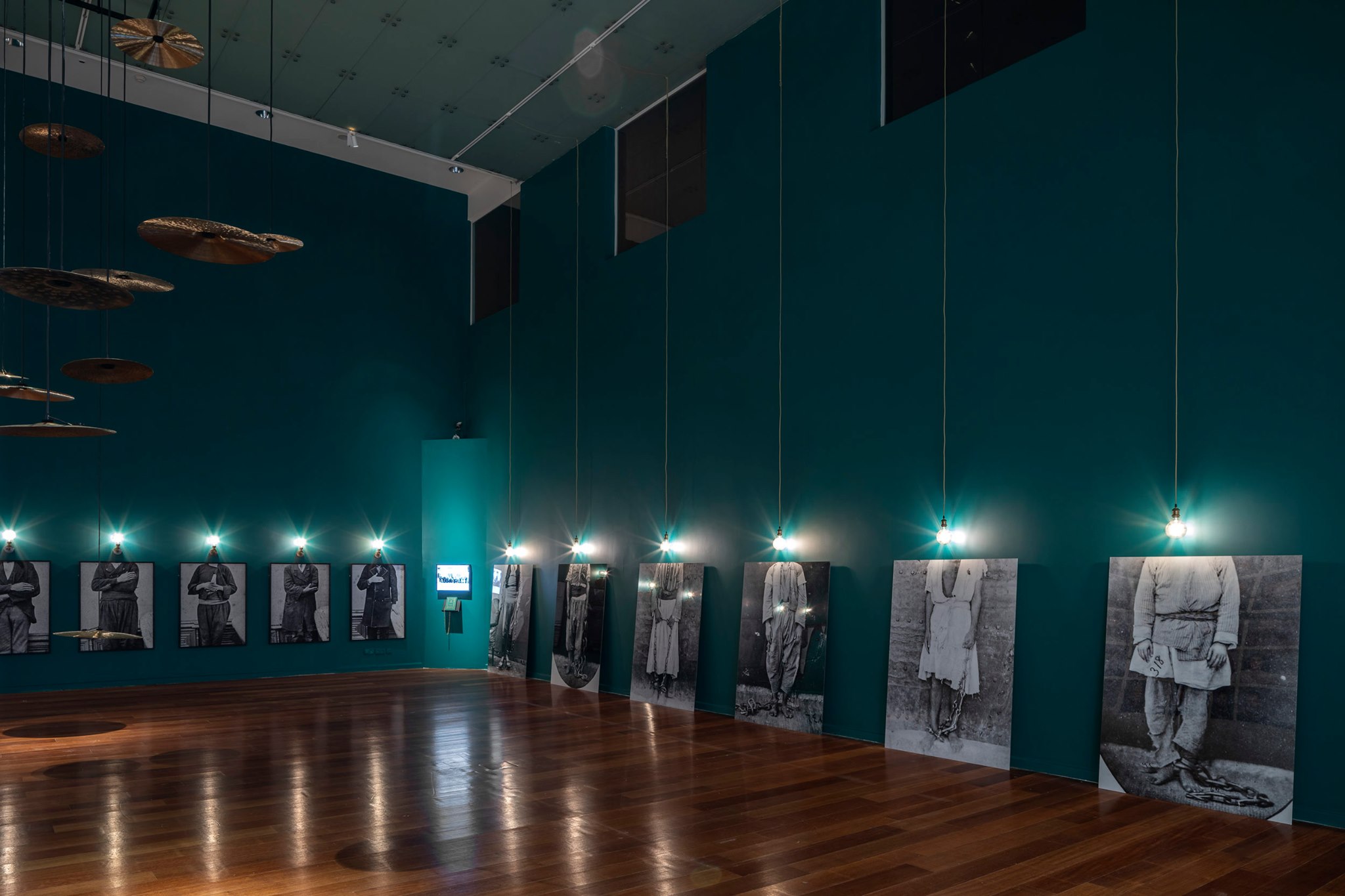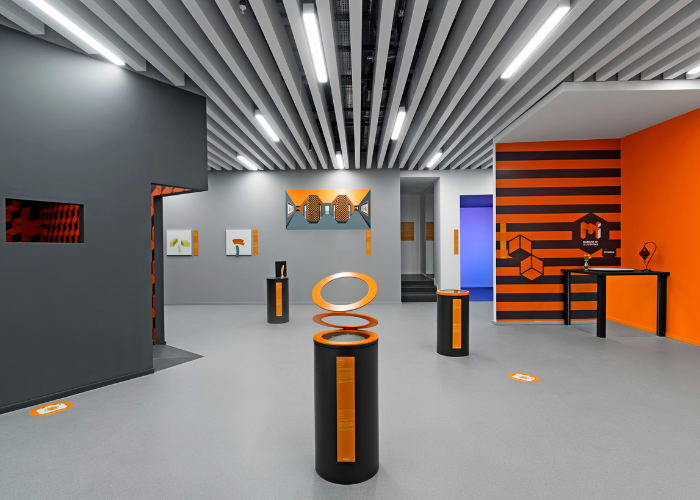


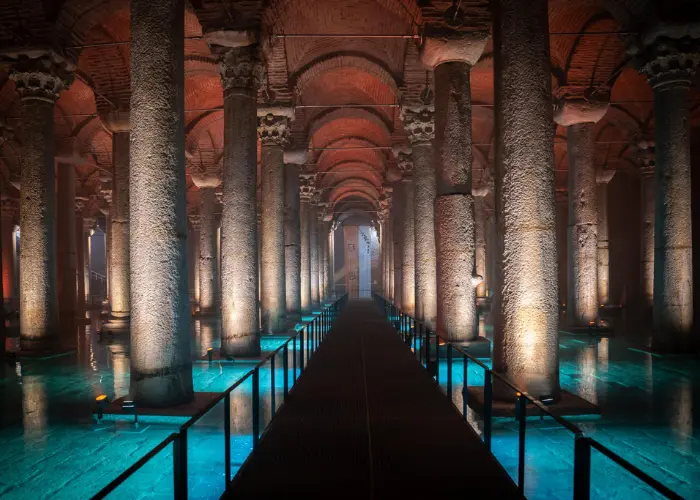
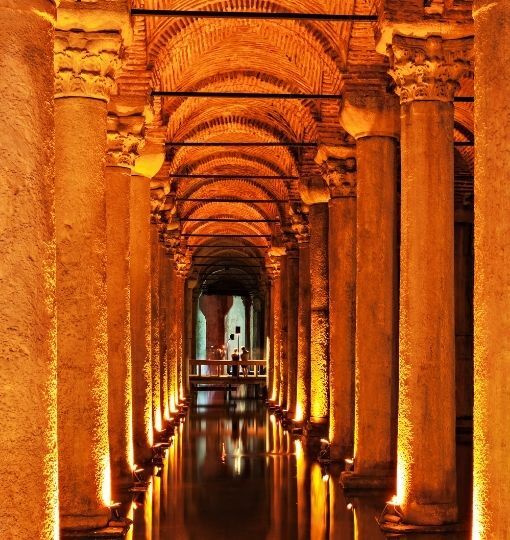

Basilica Cistern has gone under a major restoration and reopened in 2022. Now, by 2023, it is not just a historical place to visit but an extraordinary museum that blends historical walls with modern art.
Before we have a look at Basilica Cistern and its amazing history, check out Istanbul Tourist Pass® which includes an amazing Guided Tour to Basilica Cistern among 100+ great attractions. Let’s dig into the history and today of this marvelous place!

General Information About Basilica Cistern
The Basilica Cistern, located southwest of Hagia Sophia, is one of Istanbul's best tourist attractions. As one can see from the underground marble columns, this large underground water reservoir was installed for Justinianus I, the Byzantium Emperor (527-565), and is known to the public as the "Yerebatan Cistern'' Since there used to be a basilica on the site of the cistern, it's now known as Basilica Cistern.
The cistern is a huge structure that occupies a rectangular area, measuring 140 meters long and 70 meters wide. There are 336 9-meter-high columns in the Cistern, which can be accessed with a 52-step staircase. The columns are spaced at 4.80 m intervals and are made up of 12 rows of 28 columns each. The case bay of the cistern is transported over arches by the columns. The rest of the columns are made up of a single piece, with the exception of one that is made up of two pieces. The bulk of the columns is believed to have been sculpted out of various styles of marble and gathered from ancient sites in Istanbul.
History of Basilica Cistern
The Basilica was a Roman cathedral. The Cisterna Basilica, also known as the Cistern, is the largest of several hundred ancient cisterns in Istanbul, Turkey. The cistern, which is 150 meters (490 feet) southwest of Hagia Sophia on the historical peninsula of Sarayburnu, was built in the 6th century during the reign of Byzantine Emperor Justinian I. It is now stored with only a small amount of water inside the space for public access. When you visit Istanbul, pay a guided visit to the Basilica Cistern, which holds a significant position among Istanbul's historical sites.
The heads of these columns have a variety of patterns. The Corinthian style is used in 98 of them, while the Dorian style is used in the remaining ones. For water resistance, the cistern's walls are 4.80 meters thick, and the floor is bricked and plastered with a dense layer of brick dust mortar. The cistern covers a total area of 9,800 square meters and can hold 100,000 tons of water.

The Basilica Cistern served the region's residents as well as the large, sprawling palace where the emperor lived under Byzantium's dominion as a means of meeting water needs. It was put to use for a short time after Istanbul was conquered in 1453, and water was delivered to Topkapi Palace, where the sultans lived. However, the Ottomans built their own water systems in the city because they preferred flowing water over still water. The cistern is considered to have been abandoned after that, and it wasn't until the middle of the 16th century that the western world became aware of it.
P. Gyllius, a Dutch traveler who went to Istanbul to conduct research on Byzantine ruins, was responsible for the rediscovery of the Basilica Cistern and its introduction to the western world between the years of 1544 and 1550. In one of his studies, P. Gyllius, who was wandering around Hagia Sophia, was able to enter the cistern with a torch in his hand by going down the stone steps that led underground from the backyard of a wooden building surrounded by walls, which was located on a sizable underground cistern. According to reports, the locals there dug bucket-sized holes similar to wells on the ground floor of their homes to draw water from and even fished there. Under difficult circumstances, P. Gyllius rowed a boat around the cistern, measured it, and noted the columns. Gyllius made an impact on many travelers thanks to the trip book that contained the knowledge he gained from his experience.

Since it was built, the cistern has undergone numerous restorations. The cistern had two renovations during the Ottoman Empire's administration, with the first one being carried out by architect Kayserili Mehmet Aa in 1723 under Ahmed III. Additionally, the second restoration was carried out during Sultan Abdulhamid II (1876-1909). The cistern was cleaned during the republican era by the Istanbul Municipality in 1987 and made accessible to visitors so that a path could be made. In May 1994, a thorough cleaning was performed once more.
In 2022, Basilica Cistern reopened again after a complete renovation. With this comprehensive renovation. By 2023, Basilica Cistern is now a modern art museum in which various events hold place. So, travelers are welcome to discover this amazing place. We highly recommend you join a guided tour to understand this place fully without waiting in a long line, that’s why we included a Guided Basilica Cistern Tour in Istanbul Tourist Pass®.
Medusa Heads in Basilica Cistern
In the northwest corner of the cistern, the bases of two columns are made of blocks engraved with Medusa's profile. The two heads' sources are unclear, although they are thought to have been transferred to the cistern after being removed from a late Roman structure. There is no written documentation that they were used as column pedestals in the past. The blocks are claimed to be twisted and angled sideways to deflect the Gorgons' gaze; however, it's commonly thought that one was oriented sideways only to be the correct size to hold the column. The upside-down Medusa was mounted that way so she would be the same height right-side up as the usual Medusa. This mythological building definitely deserves a visit during your Istanbul vacation.

According to legend, 7,000 slaves were used in the construction of the cistern. The enlarged cistern served as a water filtration plant for Constantinople's Great Palace and other First Hill residences, and it continued to provide water to the Topkapi Palace after the Ottoman conquest in 1453 and into modern times.
According to ancient sources, the basilica had gardens that were surrounded by a colonnade that faced the Hagia Sophia. Emperor Constantine built a structure that was later rebuilt and enlarged by Emperor Justinian following the 532 Nika riots, which devastated the city.
Save Time and Money with Istanbul Tourist Pass!
The Istanbul Tourist Pass® is needed whether you are a first-time traveler or returning to the amazing city of culture. The Pass gives you access to more than 100 attractions while still saving you money! With the Istanbul Tourist Pass®, you can save up to 75%. You will also save a lot of time with the Pass and you will not have to stand in ticket queues. All you have to do now is screen your pass on your phone and you're free to go! There is a slew of other benefits that come with the Pass that you can check out!
FAQ
Why is the Basilica Cistern closed?
Basilica Cistern has been closed down for maintenance for a while. But as of July 2022, Basilica Cistern has been reopened following this extensive restoration.
Why is Basilica Cistern famous?
There are many cisterns in Istanbul but Basilica Cistern is famous for its huge structure and ancient columns as well as its Medusa heads.
What movies was filmed in the Basilica Cistern?
Dan Brown's thriller “Inferno” was filmed in the Basilica Cistern.
How much does it cost to visit Basilica Cistern?
As of 2023, the entrance ticket for Basilica Cistern is 300TL but if you wish a skip-the-line ticket with a Guided Tour, then it is FREE with Istanbul Tourist Pass®.
Is Basilica Cistern open in 2023?
Yes, it is open and waiting for visitors to discover its amazing beauty.
How do I get to Basilica Cistern Istanbul?
Southwest of Hagia Sophia is where Basilica Cistern is located. Take the F1 funicular to Kabataş from Taksim. Take the tram T1 from Kabataş Station seven stops to Sultanahmet Station. Basilica Cistern is only two minutes away from here.